The quickest way to reach the majestic peaks of Skardu isn’t always the 45-minute flight. It’s the classic traveler’s dilemma, isn’t it? You’re dreaming of turquoise lakes and breathtaking mountain views, but you’re stuck weighing the convenience of a flight against the epic adventure of a road trip. You worry about unpredictable weather grounding your plane, but the thought of navigating the legendary Karakoram Highway with your family brings its own set of questions about safety and time.
This is where the confusion ends. We’ve created the ultimate guide to help you decide how to travel to Skardu by road vs by air for your 2026 trip. We’re breaking down the honest pros and cons of each journey, from real travel times and potential costs to what each option truly feels like, so you can plan a seamless and unforgettable Himalayan escape. Get ready to discover a detailed comparison of flight reliability, a look at the current KKH conditions, and a scenic itinerary that turns the drive into the adventure of a lifetime.
Key Takeaways
- Understand the critical trade-off between the breathtaking 1-hour flight over Nanga Parbat and the epic, multi-day adventure of a road journey.
- Discover which travel style-honeymooner, family, or adventurer-is best suited for each option in our travel to Skardu by road vs by air decision guide.
- Learn the crucial difference between the all-weather Karakoram Highway and the seasonal Babusar Top route to avoid unexpected delays on your road trip.
- Uncover the reality of Skardu’s “weather gamble” and get essential tips for managing flight cancellations to ensure a stress-free start to your Himalayan escape.
The Skardu Travel Dilemma: Speed vs. Scenery in 2026
Tucked away in the heart of Gilgit-Baltistan, Skardu is a land of majestic giants. It’s a place where the Karakoram, Himalaya, and Hindu Kush ranges converge, creating a landscape so dramatic it feels otherworldly. But this breathtaking beauty comes with geographic isolation. Reaching this paradise presents every traveler with a fundamental choice, a decision that will shape their entire adventure: do you fly over the mountains, or do you journey through them? The debate over whether to travel to Skardu by road vs by air is about more than just logistics; it’s a choice between speed and story.
Your two primary paths are clear. You can take a thrilling 60-minute flight with PIA or Airblue, soaring past the colossal peaks of Nanga Parbat for a bird’s-eye view. Or, you can embrace the epic overland journey, a multi-day expedition by private vehicle or public bus along the legendary Karakoram Highway and the newly-widened Skardu Road. As we look towards 2026, this choice is more compelling than ever. With the major upgrades to the final 167-kilometer Jaglot-Skardu road fully settled since 2023, the road trip is now faster and safer, transforming the journey from a test of endurance into a world-class scenic drive. How you get there isn’t just a prelude to your vacation. It is the vacation.
Why the Choice Matters for Your Itinerary
Your decision directly impacts your trip’s length, your physical well-being, and your wallet. A flight-based trip can be a whirlwind 5-day escape, perfect for those short on time. In contrast, the road journey demands a commitment of at least 10 days to be truly enjoyed. Flying gets you there fast, but the rapid ascent to 2,228 meters requires a full day of acclimatization to avoid altitude sickness. The road trip, while physically tiring after 18+ hours of driving from Islamabad, allows your body to adjust gradually. For a solo traveler, a one-way flight ticket costing $150 might be a worthy expense, but for a family of five, that same $750 expense makes a shared private 4×4 (at around $120 per day) a far more economical choice.
Skardu’s Strategic Importance
Skardu is more than a destination; it’s the gateway. This is your basecamp for the trek to K2, the second-highest mountain on Earth, and your entry point to the vast, high-altitude plateau of Deosai National Park. Your arrival method sets the tone for these grand adventures. Arriving by air, rested and acclimatized after a day, might leave you with more energy for a challenging trek. Arriving by road, you’ll already be steeped in the mountain culture, having witnessed the landscapes unfold slowly and majestically. Understanding Skardu’s geography and climate is the first step in planning any serious expedition from here. Nestled at the confluence of the Indus and Shigar Rivers, Skardu is the undisputed climber’s capital of Pakistan, where the world’s most ambitious mountaineering dreams take flight.
Flying to Skardu: The 1-Hour Miracle and the Weather Gamble
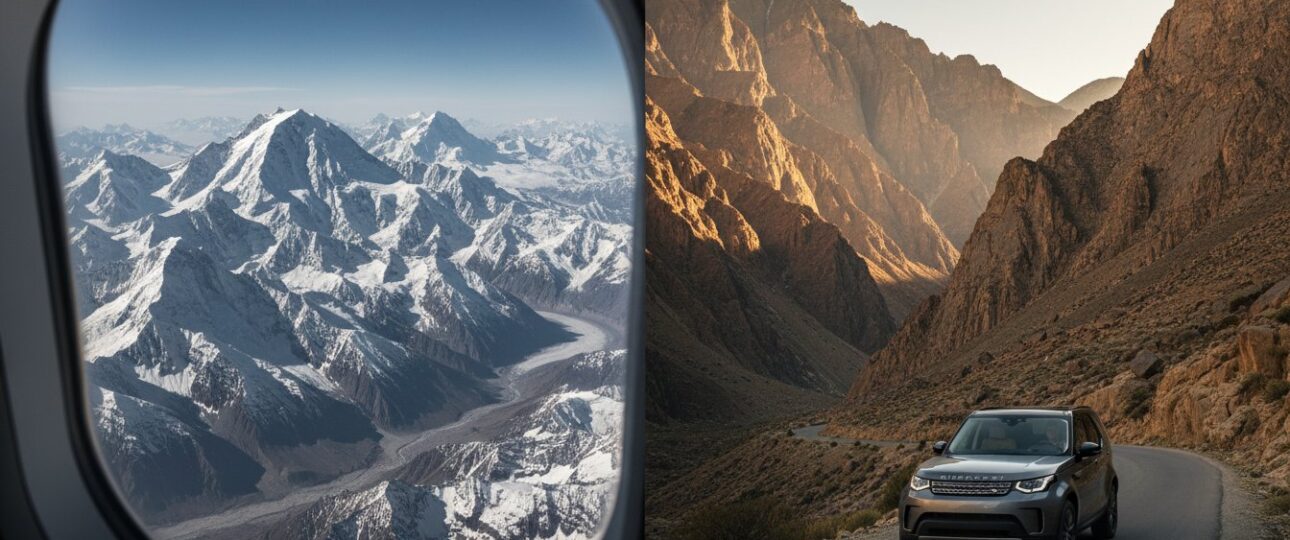
Choosing to fly to Skardu is choosing speed and spectacle. Instead of a multi-day road trip, you are whisked from Islamabad to the heart of the Karakoram in about 60 minutes. This isn’t just a flight; it’s one of the most breathtaking aerial journeys on Earth. As the aircraft ascends, it navigates a celestial highway flanked by the world’s tallest mountains. The true showstopper is the moment you glide past the colossal ice wall of Nanga Parbat, the “Killer Mountain,” feeling so close you could almost touch its jagged peaks. It’s a majestic, humbling experience that sets an unforgettable tone for your adventure.
However, this miracle comes with a significant catch: the weather. Skardu’s airport operates under Visual Flight Rules (VFR), meaning pilots need clear, unobstructed visibility to navigate the narrow valley and land safely. There is no room for error. This dependency on perfect conditions is the core of the dilemma in the travel to skardu by road vs by air debate. As of 2026, airlines like PIA and Airblue offer regular commercial flights, with private charters available for bespoke journeys. The increased connectivity, highlighted by the impact of new direct flights from major hubs, has made air travel more accessible than ever. Yet, the weather remains the ultimate, unpredictable gatekeeper.
The Flight Experience: What to Expect
To maximize your chances of a successful flight, book a morning departure, as the weather in the mountains is typically more stable before noon. For the best views, here’s a local secret: book a seat on the left side of the plane (rows ‘A’) for an unparalleled view of Nanga Parbat. On the final approach to Skardu, the right side (rows ‘F’) often gets a fleeting glimpse of the distant K2 pyramid on exceptionally clear days. Remember that these flights often use smaller ATR aircraft, so luggage allowance is strictly enforced at 20kg per person. Pack light and smart.
Managing the Risk of Cancellations
The statistical reality is that flight cancellations are common, with rates climbing to over 30% during the monsoon (July-August) and heavy winter snow (December-January). A cancelled flight doesn’t have to ruin your trip if you plan for it. Always build a 24-hour buffer day into your itinerary after your scheduled arrival. While airlines provide refunds or a spot on the next available flight, “next available” could be days later during peak season. This is where a dependable Plan B transforms potential stress into a seamless transition. At iMusafir.pk, our flight-based itineraries come with a crucial safety net: an immediate road backup plan. If your flight is grounded, we don’t leave you waiting. Our team instantly arranges a comfortable, private vehicle to get you to Skardu, ensuring your adventure begins without missing a beat. It’s the smartest way to guarantee your unforgettable journey. Flying offers a breathtaking shortcut, but smart planning is what truly ensures you arrive.

The Road Trip to Skardu: Routes, Timeframes, and Stopovers
Choosing to drive to Skardu isn’t just about reaching a destination; it’s about embracing an unforgettable journey through some of the planet’s most dramatic landscapes. The debate over travel to Skardu by road vs by air often comes down to this very experience. The road trip is an adventure in itself, offering two distinct paths that eventually merge for the final, breathtaking leg of the journey. Your choice depends entirely on the season and the kind of story you want to tell.
From Islamabad, the drive typically spans two full days, covering approximately 650-750 kilometers depending on your chosen route. This isn’t a race. It’s an immersion into the heart of northern Pakistan, best enjoyed with a planned overnight stay to rest and acclimatize.
The Babusar Top Route (The Scenic Choice)
This is the quintessential summer road trip, a journey of stunning contrasts. Open only from June to late September, this route takes you through the lush, green Kaghan Valley before ascending to the mighty Babusar Pass. The transition is magical; you leave behind the pine-scented air of Naran and enter the arid, rugged moonscape of Gilgit-Baltistan. Key stops are non-negotiable:
- Naran: A bustling resort town perfect for a meal and stocking up on essentials.
- Lulusar Lake: The source of the Kunhar River, its serene, turquoise waters are a photographer’s dream.
- Babusar Pass: At an elevation of 4,173 meters (13,691 feet), the summit offers panoramic views that will leave you speechless.
The KKH Route (The Cultural Journey)
The Karakoram Highway (KKH) is your year-round gateway to the north and a true marvel of engineering. Often called the ‘Eighth Wonder of the World’, this route follows the mighty Indus River through its deep gorges. It’s a journey through history, with ancient rock carvings and diverse cultures lining the path. The highlight is the junction point near Jaglot, where three of the world’s greatest mountain ranges-the Himalayas, the Karakoram, and the Hindu Kush-collide. For this longer route, an overnight stop in Besham or Chilas is essential for breaking up the 22-24 hour drive.
No matter which path you take from the south, your journey culminates on the Jaglot-Skardu Road. Its reconstruction, completed in 2022, has been a game-changer. What was once a bone-jarring 8-hour ordeal is now a smooth, scenic 3 to 4-hour drive. Looking ahead to 2026, continued maintenance by the Frontier Works Organization (FWO) ensures this road remains a safe, all-weather marvel of modern engineering, making the road trip more accessible than ever. For a complete breakdown of what to expect on this final leg, this detailed Skardu travel guide offers excellent, up-to-date insights. This incredible improvement in infrastructure is a key factor when considering travel to skardu by road vs by air, as it has significantly reduced the once-daunting travel time.
Decision Matrix: Which Travel Mode is Right for You?
Choosing between the epic overland journey and a swift flight isn’t just about time or money; it’s about the kind of unforgettable memories you want to create. The debate over how to travel to Skardu by road vs by air ultimately comes down to your personal travel style, your companions, and your appetite for adventure. Let’s break down which option is the perfect fit for your dream trip.
The Honeymooner’s Choice: Comfort vs. Romance
For newlyweds, the choice is between two kinds of romance. Flying offers a quick, hassle-free escape, whisking you away to the serene beauty of Skardu in just 90 minutes from Islamabad. You can be sipping tea by Shangrila Lake by afternoon, focusing entirely on each other. The road trip, however, is a shared adventure. It’s 20+ hours of witnessing majestic landscapes unfold, discovering hidden roadside cafes, and building a story together. The journey itself becomes a romantic, bonding experience.
The Family Perspective: Managing Kids on a 20-Hour Drive
Traveling with children changes everything. A 20-hour drive can test the patience of even the most seasoned family travelers. Flying directly to Skardu minimizes travel fatigue, giving you more quality time for activities once you arrive. However, a well-planned road trip with plenty of stops at places like Lulusar Lake and Babusar Top can turn the long drive into an educational and exciting adventure, creating lasting memories for the kids.
The Adventure Seeker: Why the Road is a Rite of Passage
If you have adventure in your soul, the answer is simple. You must take the road. The journey along the Karakoram Highway (KKH) isn’t just a commute; it’s a legendary expedition. It’s about feeling the vastness of the mountains, witnessing the raw power of the Indus River, and earning every breathtaking view. For thrill-seekers, the flight skips the very essence of the Gilgit-Baltistan experience.
The Hybrid Strategy: The Best of Both Worlds
Can’t decide? You don’t have to. The hybrid approach offers a perfect balance. Fly into Skardu to start your vacation refreshed and ready to explore. After soaking in the local beauty, embark on the drive back to Islamabad. This way, you experience the majestic KKH journey on the way down, when you’re already acclimatized and relaxed. It’s the ultimate way to get speed, comfort, and adventure in one trip. Ready to design your perfect Skardu journey? Explore our customizable tour packages and let us handle the details.
Cost Comparison: Air vs. Private Car Rental
Finances play a huge role in the decision to travel to Skardu by road vs by air. A common misconception is that flying is always more expensive, but the numbers can be surprising for a family of four.
- By Road (7-Day Trip): A private 4×4 like a Toyota Prado with a dedicated driver costs around $120 per day, totaling $840. Add approximately $150 for fuel and a $60 overnight hotel stay in Chilas, and your basic transport cost is about $1,050.
- By Air (Family of Four): A one-way ticket from Islamabad to Skardu can range from $100 to $180 per person. For a family of four, round-trip flights would cost between $800 and $1,440, depending on the season.
Remember the ‘hidden’ cost: If you fly, you’ll need to hire a local Jeep for sightseeing (e.g., to Deosai or Shigar), which can cost an additional $70 to $100 per day.
Safety and Reliability Checklist
Your safety is our top priority. Both travel modes are secure, but they require different precautions.
- Vehicle Requirements: The Skardu road is demanding. We strongly recommend a 4×4 vehicle with high ground clearance. While a well-maintained sedan can make it during peak summer (July-August), unpredictable weather and rough patches make a 4×4 the safer, more reliable choice year-round.
- Health Considerations: Flying directly to Skardu’s altitude of 2,230 meters (7,316 feet) can sometimes trigger mild altitude sickness. The road journey allows for gradual acclimatization. If you fly, plan to take it easy on your first day and stay well-hydrated.
For your safety on the Karakoram Highway, hiring a seasoned mountain driver with years of local experience is not a luxury; it’s an absolute necessity.
Planning Your Skardu Adventure with iMusafir.pk
Choosing between the epic overland journey and a swift flight to Skardu is just the first step. Making that dream a reality, with every detail handled flawlessly, is where we come in. At iMusafir.pk, we don’t just sell tours; we craft personalized, unforgettable experiences. Whether you crave the rugged thrill of the Karakoram Highway or the breathtaking aerial views of the Himalayas, our team ensures your journey is seamless, safe, and truly magical from start to finish.
We understand that the decision to travel to Skardu by road vs by air is deeply personal, which is why our packages are designed with complete flexibility. For road adventurers, we provide our premium fleet of over 30 company-maintained 4×4 vehicles, including 2022 model Toyota Land Cruiser Prados and Fortuners, piloted by our seasoned drivers who have navigated these mountain roads for over a decade. For those flying in, we manage all ground logistics with precision. Our team of more than 50 local, certified mountain guides are not just experts in navigation; they are passionate storytellers ready to share the rich culture and history of Baltistan with you.
The unpredictability of mountain weather is a real concern, especially for air travel. That’s why we created the iMusafir Guarantee. If your flight to Skardu is cancelled, you aren’t left stranded. Within two hours, we will have a private, fully-equipped 4×4 vehicle and a dedicated driver ready to begin your road journey, ensuring your vacation plans continue with minimal disruption. It’s this level of proactive support that turns a potential travel disaster into just another part of the adventure. Imagine stepping off the plane at Skardu Airport to find your guide waiting. Within minutes, you’re settled in a comfortable SUV, heading directly to the serene shores of Shangrila Resort to begin your escape without a moment of hassle.
Tailored Skardu Tour Packages
Your adventure should be as unique as you are. Whether it’s our popular 7-day “Skardu Love in the Heights” honeymoon package or our 10-day “Karakoram Family Discovery” tour, every itinerary can be customized. Dream of witnessing the sunrise over the vast Deosai Plains or exploring the timeless elegance of Khaplu Fort? We’ll build it into your plan. Explore our Skardu Town packages to see what’s possible.
Booking Your 2026 Journey
With iMusafir.pk, what you see is what you get. Our ‘No Hidden Fees’ promise means your quoted price includes all government permits, standard hotel accommodations, and transport costs upfront. While you’re exploring the majestic northern areas, our 24/7 support line is always available, providing you with complete peace of mind. Let’s turn your travel dreams into a breathtaking reality. Book Your Unforgettable Skardu Journey Today!
Your Unforgettable Skardu Journey Begins Now
Whether you choose the swift 1-hour flight over the peaks or the soul-stirring multi-day road trip through breathtaking valleys, Skardu’s magic is undeniable. The debate over how to travel to Skardu by road vs by air ultimately comes down to what you value most for your 2026 adventure: the speed of arrival or the scenic discovery along the way. It’s a choice between a thrilling shortcut and an epic journey, and there’s no wrong answer.
You don’t have to make that choice alone. At iMusafir.pk, we specialize in turning travel dreams into reality. With our specialized mountain-ready vehicle fleet and 24/7 local support in the Northern Areas, we’ve already helped create over 500+ unforgettable memories for adventurers just like you. We handle every detail, so you can focus on the wonder.
Ready to experience the majesty of Skardu? Plan your dream Skardu trip with Pakistan’s top-rated travel agency and let your adventure begin. The mountains are calling.
Frequently Asked Questions
Is it safe to travel to Skardu by road at night?
No, it is strongly advised against travelling to Skardu by road at night. The Karakoram Highway and the Skardu Road are mountainous routes with sharp turns, poor lighting, and the potential for landslides. For your safety, all reputable transport services, including public buses, cease operations after dark. We recommend planning your journey to reach a safe stopover town like Chilas or Jaglot well before sunset for a secure and stress-free adventure.
What happens if my flight to Skardu is cancelled?
If your flight to Skardu is cancelled, the airline will typically offer a full refund or rebook you on the next available flight. However, cancellations are common (affecting up to 30% of flights) due to unpredictable weather in the mountains. The next flight may be several days later, so it’s wise to have a flexible schedule. This uncertainty is a major consideration when weighing the options to travel to Skardu by road vs by air.
How long is the road trip from Islamabad to Skardu via Babusar Top?
The road trip from Islamabad to Skardu via the scenic Babusar Top route involves approximately 22 to 26 hours of pure driving time. This epic journey is almost always split into two days, with a necessary overnight stay in a town like Naran or Chilas. This breaks up the drive and allows you to enjoy the breathtaking landscapes along the way. Remember, the Babusar Pass is only open from June to October.
Can a standard 1300cc car reach Skardu from Islamabad?
Yes, a well-maintained 1300cc sedan, like a Toyota Corolla or Honda City, can successfully make the trip to Skardu. However, the drive can be very demanding on the vehicle, particularly on the steep ascent to Babusar Top. It’s essential to ensure your car’s brakes, tires, and engine cooling system are in perfect condition before you depart. For better ground clearance and a more comfortable journey, a 4×4 is highly recommended.
Which side of the plane should I sit on for the best mountain views?
For the most spectacular and unforgettable mountain views on your flight into Skardu, you should book a seat on the right side of the aircraft. This side offers the potential for a breathtaking, close-up view of Nanga Parbat, the ninth-highest mountain in the world. Choosing a window seat (often labeled ‘F’ or ‘K’) on the right-hand side provides a truly majestic introduction to the Karakoram giants you’re about to explore.
Is the road to Skardu fully paved in 2026?
As of early 2024, the main Jaglot-Skardu Road (S-1) has been massively upgraded and is approximately 95% paved. This has transformed the journey, cutting the drive time from Jaglot from over 8 hours down to about 4 hours. While some minor sections might still be under construction, the road is far smoother than it was before 2022. It is widely expected that the project will be fully completed well before 2026.
How can I avoid altitude sickness when flying directly to Skardu?
To minimize the risk of altitude sickness upon arrival in Skardu (elevation: 2,228 meters), the most important step is to rest and acclimatize on your first day. Avoid any strenuous activity, drink at least 3-4 liters of water, and avoid alcohol for the first 24 hours. Allowing your body this crucial time to adjust to the lower oxygen levels is the key to ensuring a safe, comfortable, and adventure-ready start to your trip.
What is the best month to travel to Skardu by road?
The best time to travel to Skardu by road is between June and September. This is the prime summer window when the stunning Babusar Pass is open, providing the shortest and most scenic route via the Kaghan Valley. During these months, the weather is pleasant, the landscapes are lush and vibrant, and the risk of road closures due to snowfall is minimal, guaranteeing you an unforgettable journey through Pakistan’s majestic north.